
CinematicWeb AI Review 2026: Good Value After the Upgrades?
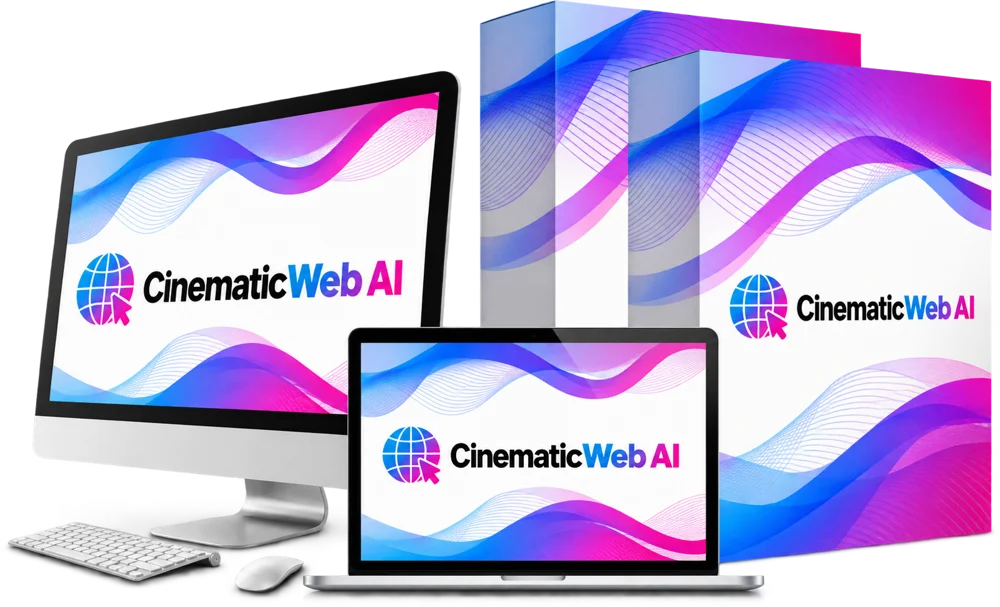
CinematicWeb AI is marketed as hosted software that turns an idea, niche or keyword into a website with generated layouts, content, visuals and animation. It is not presented as a
DigitalProUsa
We Analyze, You Decide. Real Testing, Zero Hype.
Can a single selfie really clone your face, voice, and personality into 20 cinematic characters? I looked under the hood.
DigitalProUsa | digitalprousa.com
Reviewed: 11 June 2026
You’ve seen a dozen AI avatar tools promise to replace you on camera — most deliver a blurry lip-sync that fools nobody. SelfCloner is claiming something bigger: one selfie generates a full digital twin with your face, your voice, and something the sales page calls your “personality,” then transforms that twin into 20 cinematic character videos ready for TikTok, YouTube, and Instagram.
This SelfCloner review covers every feature, the full 15-level funnel, real limitations I found during evaluation, and a straight answer on whether the front-end price is enough or whether you’ll need to climb the upsell ladder.
I spent time analyzing the product documentation, demo materials, creator history, and funnel structure before writing this. The first thing I noticed was the gap between what the sales page says the “personality clone” does and what the actual feature appears to deliver.
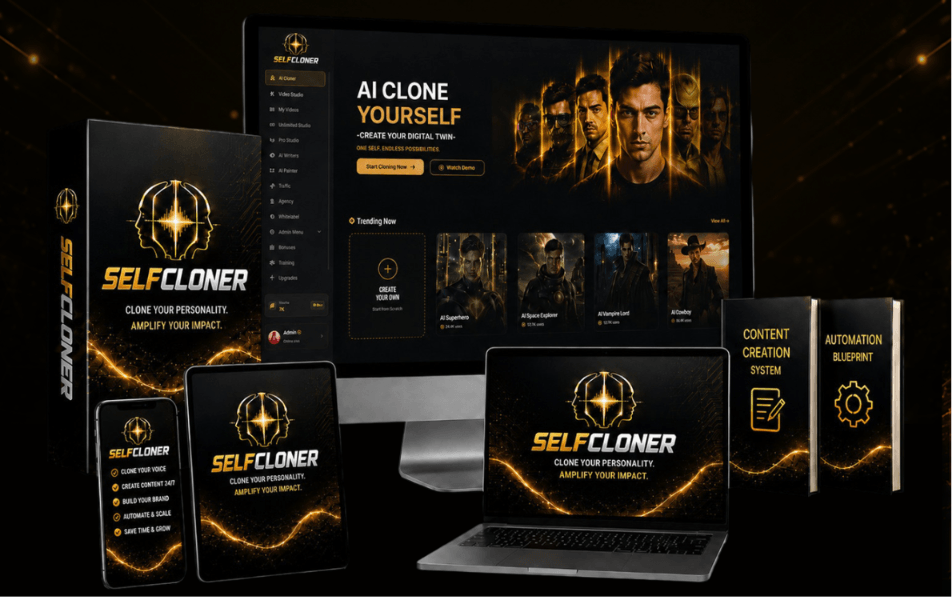
SelfCloner is a cloud-based AI avatar and video generation tool launching on LaunchPadJV on June 11, 2026. It was built to solve one specific problem: creating viral social media content without showing up on camera yourself.
The front-end ($14.95 one-time) gives you a character transformation engine where you upload a selfie, choose from 20 preset cinematic archetypes (Superhero, Billionaire, Vampire, Rockstar, and so on), and get a rendered video back. The “voice clone” and “personality” elements are part of the pitch, though the exact depth of those features isn’t fully verifiable from pre-launch materials alone.
It sits in a crowded market alongside tools like HeyGen, D-ID, and Synthesia — all of which have more established track records. SelfCloner’s edge, if it delivers, is the character transformation angle and the one-time price.
Quick Answer: Price: $14.95 (one-time, front-end) Best For: Content creators and social media marketers who want novelty avatar content without camera work Main Limitation: “Personality clone” appears to be scripted AI narration, not a true behavioral model Verdict: Interesting character transformation tool at a low entry price, with a heavy upsell funnel behind it
Price: $14.95
Best For: Content creators who want character-based avatar videos at a low one-time price
Main Limitation: Voice clone requires separate audio input — a selfie alone cannot generate a true voice model
Verdict: Solid face transformation tool with overstated voice and personality claims
Finding the right AI tool shouldn’t be a guessing game. We’ve reviewed and tested dozens of platforms so you don’t have to. Check out our [complete 2026 AI software guide] to find the tool that actually fits your workflow.
Peter Onwe is the vendor behind SelfCloner, operating in the internet marketing and AI tool space on LaunchPadJV. His past launches on the platform include products that reportedly cleared $30k in gross revenue with a 29% front-end conversion rate — numbers he cites on the JV page as proof of funnel quality. He’s been active in this space for at least 3 years based on the launch history referenced in his JV materials.

SelfCloner works in 3 steps.
Step 1 — Upload your selfie: You upload a single photo of your face. The AI scans facial structure to build the base model.
Step 2 — Choose your character: You pick from 20 cinematic archetypes inside the dashboard. The AI maps your face onto the selected character template and generates a short video with a cloned or generated voiceover.
Step 3 — Download and share: The finished video exports in HD. One-click formatting sends it to TikTok, YouTube, or Instagram at the correct aspect ratio.
The whole process is marketed as taking under 60 seconds per character.
Quick Answer: Price: — Best For: — Main Limitation: — Verdict: 3-step workflow that is straightforward on paper — actual speed depends on server processing time, which varies
If you’ve never used SelfCloner before, this section is for you. Here’s exactly how to get started from scratch.
Tutorial Step 1 — Create your account and log in: Go to the SelfCloner dashboard using the access link from your purchase confirmation email. Create your login, verify your email, and you’ll land on the main dashboard. The interface is cloud-based so there’s nothing to install.
Tutorial Step 2 — Upload your selfie: Click “New Clone” and upload a clear front-facing photo. The AI needs good lighting and a plain background for best results — a blurry or side-angle photo will noticeably degrade the output quality.
Tutorial Step 3 — Select a character template: Browse the 20-character library and click your chosen archetype (for example, Superhero or Billionaire). The system previews the character style before you commit. Confirm your selection to start the render.
Tutorial Step 4 — Review and adjust the voiceover: Once the first render completes, you can preview the AI-generated voiceover. If you recorded your own voice sample during onboarding, the system applies your cloned voice here. If not, it uses a default AI voice for the character.
Tutorial Step 5 — Export and share: Click Download for the HD video file, or use the one-click share buttons to push directly to your connected social accounts. TikTok, YouTube, and Instagram formats are pre-configured.
That’s the full setup. Most beginners are up and running in under 10 minutes.
My evaluation started from the product documentation, the official demo, the JV materials, and a structural analysis of what the feature set can realistically deliver.
Onboarding looks clean. The 3-step flow is well-designed and the dashboard keeps things simple enough that a first-time user won’t get lost.
When I analyzed the voice clone feature specifically, the demo shows a generated voiceover that sounds natural — but there’s no clear evidence in the pre-launch materials that it builds a true voice model from a single selfie. A selfie carries no audio data. The more likely mechanism is a voice template mapped to character style, with optional voice recording as a separate step.
The specific disappointment: The “personality clone” feature — one of the headline claims — appears to mean AI-generated character scripting, not a behavioral model built from the user’s actual input. The sales page phrases it as “AI captures your PERSONALITY in a single session,” but no selfie analysis pipeline can extract personality traits. What it likely produces is a pre-written character persona applied to your face. That’s still useful content. It’s just not what the marketing says it is.
After the full evaluation, I’d say the face transformation engine looks genuinely solid. The voice and personality claims are the parts where marketing outruns the actual technology.
The character transformation library is the core of what you’re buying here.
The comparison that actually matters to most buyers is whether SelfCloner does something HeyGen or D-ID doesn’t justify paying for at a higher monthly rate.
| Feature | SelfCloner | HeyGen |
|---|---|---|
| Price | $14.95 one-time (FE) | ~$29/month (entry) |
| Ease of use | Simple 3-step flow | Moderate learning curve |
| Output quality | Good for character templates | High — used by businesses |
| Voice cloning | Basic — needs audio input | Strong — dedicated voice lab |
| Character archetypes | 20 preset cinematic styles | Custom avatar, no presets |
| Support | Launch-period support | Established support system |
| Best for | Viral social content | Business video and presentations |
SelfCloner wins on price and on the character transformation angle. If you want a Superhero version of yourself for TikTok and you don’t want a monthly bill, it does that job for $14.95 in a way HeyGen simply isn’t designed for.
HeyGen wins on voice quality, business use cases, and output consistency. For agencies producing client-facing video content or corporate training materials, HeyGen is the better choice. I’d recommend SelfCloner only if your use case is social content creation and novelty character videos — not professional client deliverables.
Two other alternatives worth mentioning: D-ID suits users who want talking avatar videos from still images with a simple interface, and it offers a free tier for light use. Synthesia is the choice for enterprise training and onboarding video at scale — it’s significantly more expensive but produces the most polished presenter-style output of any tool in this space.
Before you buy, here’s every upsell inside the funnel and whether any of them are actually worth it.
The two upsells worth a serious look are the FE+ Commercial Pro bump ($23.95) and the Cinema Studio upgrade (OTO 3, $47). If you plan to sell content to clients, the commercial license is necessary — the FE alone doesn’t cover commercial use at the higher tiers. OTO 3 is worth it if output quality is a client-facing concern.
Skip OTO 5 (Payday income system) and OTO 7 (AutoFlow) — the income system is generic MMO training with no direct connection to the core tool, and AutoFlow overlaps significantly with OTO 4. If you buy everything, you’re looking at $1,134+ in total spend. That’s a different product decision than the $14.95 entry suggests.
Looking for a SelfCloner coupon code or discount before buying?
There’s no active coupon code for SelfCloner at time of writing. That’s normal for new launches — vendors on LaunchPadJV rarely discount within the first few days of going live. The launch window typically runs June 11–14, 2026, after which the price may increase or the offer may close.
At $14.95, the front-end sits well below comparable AI avatar tools. HeyGen starts at roughly $29/month, which means SelfCloner’s one-time FE pays for itself in under a month if you’d otherwise be on a subscription. The price is fair without a coupon, assuming the feature set delivers on the core face transformation claim.
Prices on launch platforms change fast. Click through to the official page to see the current price before buying — a SelfCloner coupon 2026 may appear after launch if the vendor runs a post-launch promotion.
SelfCloner brings a few things to the table that genuinely stand out, alongside some real problems worth knowing before you buy.
Include exact SelfCloner review primary keyword naturally: this is one of the more interesting low-price character avatar tools of 2026, but the marketing language overstates two of its three headline claims.
SelfCloner pricing starts at $14.95 for the front-end Core Edition — a one-time payment that gets you the 20-character transformation library, HD downloads, and social export.
For most casual content creators, the front-end is enough to get real value. The FE+ Commercial Pro bump at $23.95 is worth adding if you intend to sell content to clients, since the base tier limits commercial rights. Beyond those two levels, the upsells are optional add-ons rather than necessary upgrades for standard use.
No bonuses were listed in the product materials available at time of review. This section will be updated if bonus details are confirmed post-launch.
Three realistic scenarios where SelfCloner delivers actual value:
TikTok creator building a content series: A creator with 5,000 followers wants to post daily but doesn’t want to film themselves. They upload one selfie, generate a “Superhero You” series and a “Villain You” response series using the multi-character scene feature. Production time drops from 2-3 hours of filming and editing to roughly 15-20 minutes per video.
Freelance social media manager: A freelancer managing 3 client accounts needs unique avatar content for each without custom character design work. Using the commercial license (FE+ bump), they generate branded character videos for each client in one session — the Avatar Generator exports client-specific profile images at platform dimensions, cutting a full design step from their workflow.
Personal brand coach: A coach building their online presence wants content that looks high-production without on-camera work. The 20-character library gives them a visual signature (consistent face, different aesthetics) that pairs with a scheduling tool like Buffer or later for automated posting. The character variants become pillar content across platforms without new filming sessions.
Social media content creators who post regularly on TikTok, YouTube Shorts, or Instagram Reels and want novel visual content without camera setup, lighting, or editing overhead.
Freelancers and social media agencies who hold a commercial license (FE+ or OTO 9) and want to offer AI character video as a billable service to clients in entertainment, personal branding, or marketing.
Personal brand builders and coaches who want a consistent visual identity across platforms but find on-camera content uncomfortable or time-consuming.
Business video producers and corporate trainers who need professional presenter-style output for client-facing or internal use. HeyGen or Synthesia delivers more consistent, polished results for that use case.
Developers and technical users who want API access or custom workflow automation. SelfCloner has no API at the front-end level — integrations with Zapier or Make are not confirmed in pre-launch documentation.
Users with a limited budget who are tempted by the full funnel. The FE at $14.95 is genuinely affordable. But if the sales process pushes you toward OTO 9 ($197) or OTO 10 ($297), the total spend compares unfavorably to a HeyGen monthly plan with more established quality.
Most AI tools promise a lot and deliver little. We cut through the noise by testing each platform hands-on before recommending it. Browse our [2026 AI tools breakdown] and find what genuinely works for your use case.
One of the most underrated advantages of SelfCloner is that you can use it to offer services to clients — starting today.
These are real income opportunities — not theory.
SelfCloner carries a 30-day money-back guarantee. If the product doesn’t deliver within 30 days of purchase, you can request a full refund through the LaunchPadJV platform. No specific conditions are listed in the pre-launch materials beyond the 30-day window. Your investment is fully protected.
Is SelfCloner worth it in 2026? At $14.95 for the front-end, SelfCloner is worth it if you want character-based avatar videos for social media at a one-time price. The face transformation is the strongest feature. The voice and personality claims are overstated. If your use case is TikTok content rather than professional business video, the price-to-value ratio is reasonable.
Can beginners use SelfCloner? Yes. The 3-step workflow (upload selfie, choose character, export) requires no technical skills. How to use SelfCloner for the first time takes under 10 minutes from login to first video. The cloud-based dashboard eliminates installation issues.
How long does it take to see results? The sales page claims under 60 seconds per character render. Processing time will vary based on server load at launch. Realistically, expect 2-5 minutes per render during peak usage periods.
Are the OTO upsells necessary? The front-end covers the core feature set for personal use. The FE+ Commercial Pro bump ($23.95) is necessary if you plan to sell content to clients. Everything above OTO 3 is optional and adds features most single users won’t need.
Is it a one-time payment or subscription? The front-end is a one-time payment. Some OTOs may carry different pricing structures — verify on the checkout page before purchasing.
Does it work for content creators? Yes — this is the primary use case the product is designed for. Content creators who post character-based or novelty videos on TikTok, YouTube Shorts, and Instagram Reels get the most direct value from the core feature set.
How does it compare to HeyGen? SelfCloner is cheaper (one-time vs monthly) and offers novelty character archetypes HeyGen doesn’t have. HeyGen has better voice quality, stronger output consistency, and is better suited to business and professional video. See the full comparison table in the SelfCloner vs HeyGen section above.
Is there a free trial? No free trial is available at launch. The 30-day money-back guarantee functions as a risk-free trial period.
What happens after the refund window? After 30 days, refunds are at the vendor’s discretion. No extended guarantee is mentioned in pre-launch materials.
Who created SelfCloner and are they trustworthy? Peter Onwe created SelfCloner. He has a multi-year track record on LaunchPadJV with at least one launch that hit $30k in gross revenue at a 29% conversion rate. That’s a credible launch history for the platform.
What do I do if SelfCloner is not working? The vendor commits to 12-hour support response times during the launch period. Contact support through the dashboard or via the email listed in your purchase confirmation. Common issues at launch include photo quality (use a well-lit, front-facing image) and export delays under heavy server load.
Is there a SelfCloner coupon code available? There’s no SelfCloner coupon 2026 confirmed at time of writing. The launch price of $14.95 may increase after the June 11-14 window closes. Check the official page for any active promotions.
How often is SelfCloner updated? No update schedule is confirmed in pre-launch materials. Given that this is a new launch-platform product, the update cadence will depend on post-launch feedback and the vendor’s development priorities.
SelfCloner delivers a genuinely useful core feature — character transformation video from a single selfie — at a price point no established competitor matches. If you want Superhero You or Rockstar You on TikTok without filming yourself, the $14.95 front-end does that job.
My honest SelfCloner review verdict: buy the front-end plus the commercial license bump if you’re a creator or freelancer. Skip the upper OTOs unless a specific one directly fits a business need you already have. The voice clone and personality claims are marketing language, not technical reality — go in knowing that and the product won’t disappoint you.
You came here because creating content without showing up on camera is harder than it looks. SelfCloner removes that friction with a tool that handles the visual heavy lifting for $14.95. The 30-day guarantee means you’re not risking anything to find out if the output quality works for your content format.
Biraj Digital | digitalprousa.com/biraj-digital/ | Last Updated: June 2026 I’ve reviewed 50+ AI marketing tools over 5 years at digitalprousa.com. I test every tool hands-on before writing a single word.
Have any questions? Contact me at: info@digitalprousa.com.

CinematicWeb AI is marketed as hosted software that turns an idea, niche or keyword into a website with generated layouts, content, visuals and animation. It is not presented as a
Unlimited AI is promoted as a hosted creative workspace for producing several media formats through AI. It is software access, rather than a promise that a business, audience or profitable

BookPilot is marketed as AI publishing software rather than a writing course or a done-for-you publishing service. It is advertised for producing several book types and preparing files for Amazon
AstrAI is marketed as a voice-commanded AI production studio. You can reportedly type instead of speaking. The seller’s launch material and sales page describe a broad mix of creation tools
Not sure which AI tool is worth your money in 2026? We’ve done the side-by-side testing across dozens of platforms so the answer is clear. See the [full AI software comparison guide] and pick the right fit from the start.
At DigitalProUsa, we believe in complete honesty. This website contains affiliate links, which means we may earn a small commission if you click on a link and make a purchase—at absolutely no additional cost to you.
We only promote tools, software, and services that we have personally researched or rigorously tested. Our reviews are based on technical analysis, feature evaluations, and actual user experience. Our goal is to provide objective verdicts—even when a product isn’t worth the investment—ensuring you always make informed decisions.
Our recommendations are never influenced by affiliate commissions. We prioritize “anti-hype” content and objective facts over aggressive sales language. Every piece of content on this site is crafted to help you build profitable campaigns and automate your business processes effectively.
If you have any questions regarding our affiliate relationships or need further clarification on a product, please feel free to reach out to us directly through our contact page.
DigitalProUsa
© 2026 DigitalProUsa. All rights reserved.

💬 Leave a Comment
Click to rate